
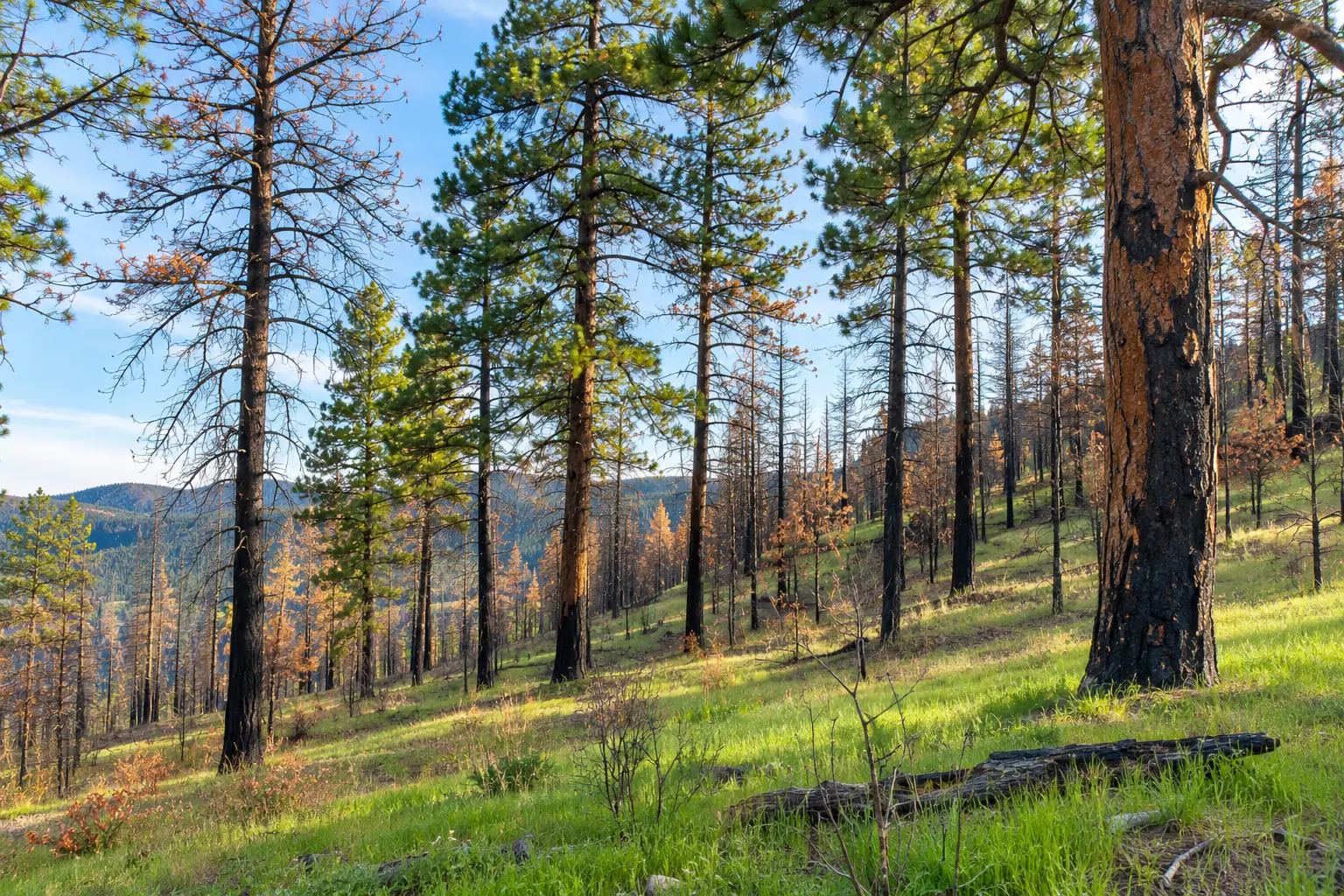
After a wildfire near Rogue River, remove burned trees first where they could hit a home, road or path, and give others time if they might live. OSU Extension advises judging each tree by crown, bark and root damage. Calls to (541) 507-9640 go to a single tree company with a CCB license, and a written estimate on fire-damaged trees is yours to request.
The 2026 East Evans Creek Fire
In 2026, the East Evans Creek Fire burned close to Rogue River. It was first reported on July 10, 2026, northeast of Rogue River, and OPB reported that it started when a car crashed into a power pole. A July 21 update from the Oregon State Fire Marshal described the fire as burning in parts of Jackson and Douglas counties, with structure protection under way in the Antioch, Jones Road, Pomeroy and Long Branch areas, and crews felling hazardous trees around a spot fire to make access safe.
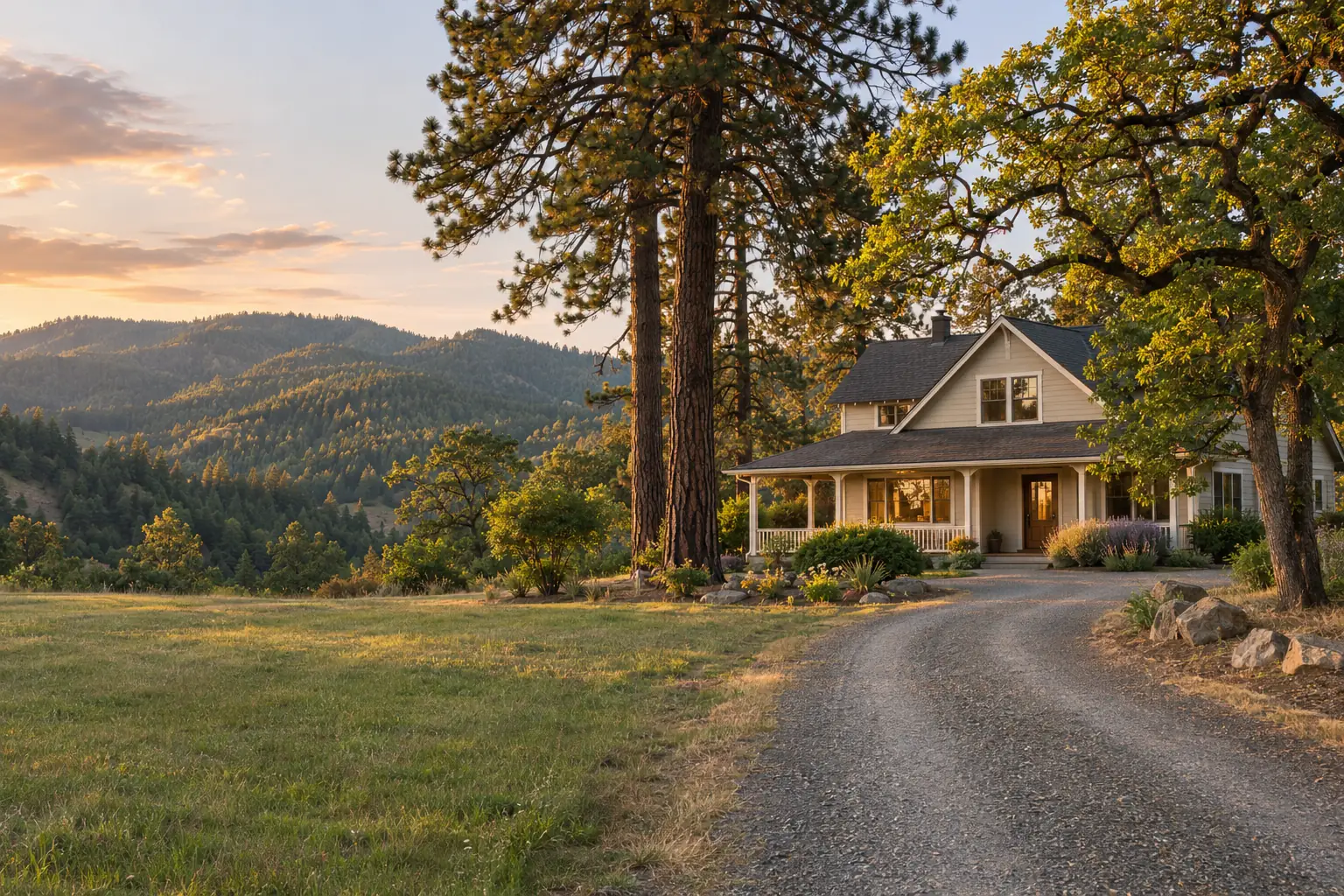
The Oregon Department of Forestry's final scheduled update, dated August 5, 2026, put the fire at 15,580 acres and 95 percent contained, with all evacuations lifted and crews working on suppression repair. The advice in this guide applies to any fire, but if your trees burned this past summer, the timing sections below are written with you in mind.
Safety before you walk the property
A burned property is more dangerous than it looks, and the trees are only part of it. OSU Extension's Learn to recognize hazard trees after a fire, published July 2025, warns that the burned ground around a hazard tree can be as dangerous as the tree itself, or more so.
Before you start looking at trees:
- Check that the way in and the way out of each area are safe. The OSU guide lists this as the first inspection step.
- Watch for burned-out stump holes and root channels, which can collapse underfoot.
- Stay out of burned stands on windy days, when weakened trees and limbs come down.
- Look up before you stand anywhere. Use binoculars to inspect crowns from a distance.
- Stay 35 feet from any line or pole that burned. A wire down in the ash is a 911 call, and the damage report to Pacific Power follows it at 1-877-508-5088, the number on its outages and safety page.
Is the tree dead or alive
Whether a burned tree will live depends mostly on three things: how much of the crown was killed, how deep the bark is charred, and how badly the roots burned. OSU Extension's Will my tree live? Assessing postfire survivability names crown injury as the first and most important factor.
Crown
Crown scorch is the share of the live crown that the heat killed, even if the needles did not burn off. Brown, scorched needles across most of the crown are a bad sign. OSU's guide says a tree that keeps a live crown of 35 percent or more of its height generally has better odds, though that varies by species and site.
Bark
Bark char tells more on thin-barked trees than on thick-barked ones. OSU lists Douglas-fir, ponderosa pine, western larch and incense cedar as thick-barked, fire-resistant species that usually need heavy crown damage to die. Thin-barked species can die even with little crown damage.
Roots and base
Look at the base of the tree. Deep char all the way around the base, and exposed, charred roots, point toward a tree that will die. Light char on one side with no exposed roots is a much better sign.
Delayed death
OSU's survivability guide says trees can die from fire injury several years after the fire, and survivors become more open to insects and drought stress. If boring dust and beetle attacks show around more than half of the trunk on a host species, the guide says the tree will die regardless of its fire injury.
Which burned trees are hazards
A dead tree is not automatically dangerous, and a live tree is not automatically safe. OSU Extension's hazard tree guide says dead trees should be considered to have a high potential for failure, and that live trees damaged by fire should not automatically be considered low risk.
The same guide lists failure factors that show up after fire:
- Whether the tree is alive or dead.
- Roots burned out underground.
- Hollowed trunks.
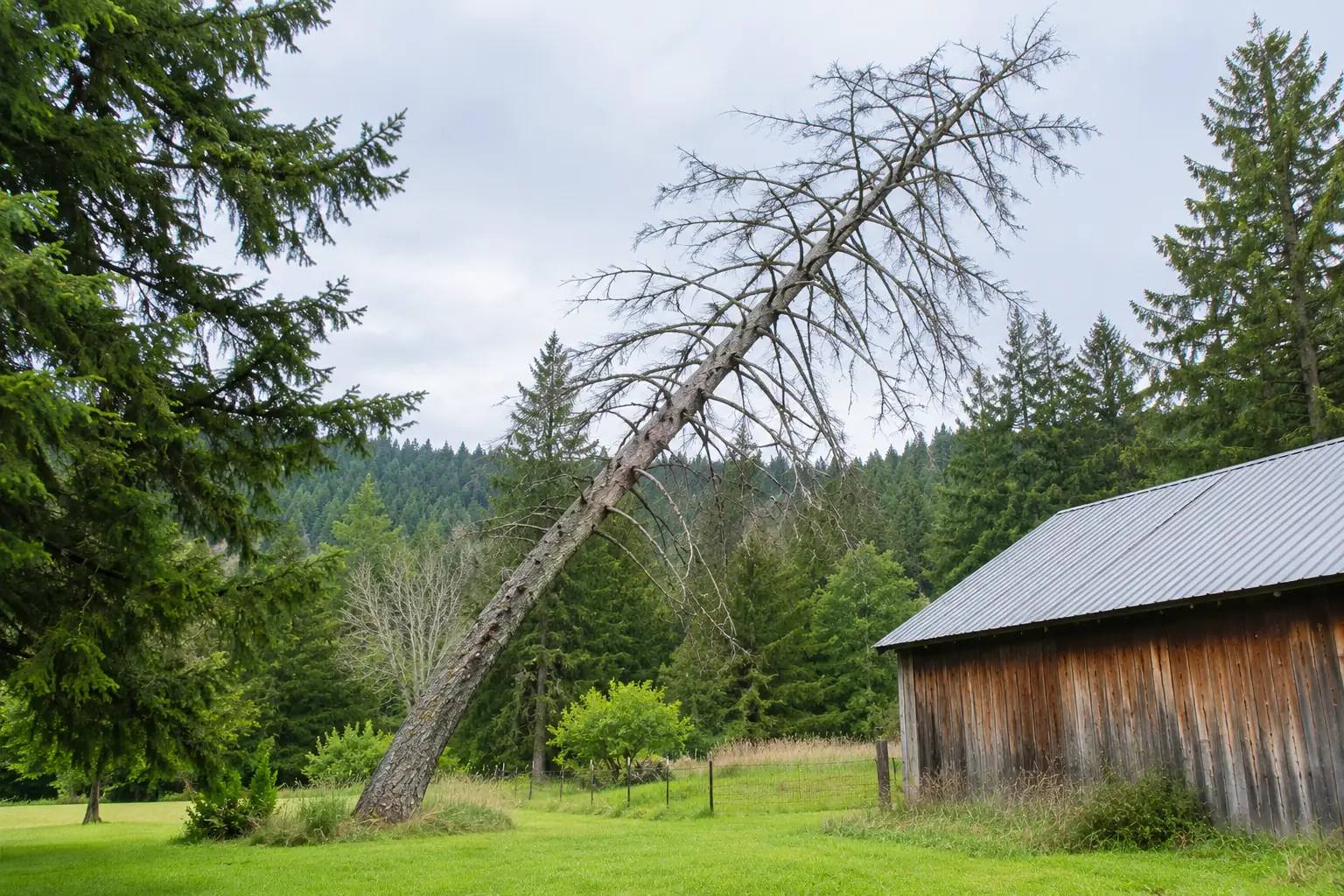
- Leaning or root-sprung trees with exposed roots.
- Loose overhead limbs, often called widowmakers.
- Broken or uprooted trees held up by other trees.
- Catfaces, which are burned-out scars at the base that reduce the sound wood.
- Signs of decay, such as conks and mushrooms, burned away so they no longer show.
It also explains that resinous species such as Douglas-fir, larch and pine carry a sticky, decay-resistant resin, while fir and hemlock are not resinous. Cedar is not resinous but resists decay.
Rating the risk around your home
The OSU guide frames each decision with three questions: is the tree likely to fall, when is it likely to fall, and is a target likely to be there when it does. A dead fir leaning over the driveway rates very differently from a dead fir in the back of the woodlot.
Sort your burned trees by what they could hit:
- Remove soon: trees that could reach the house, outbuildings, the well house, the driveway, power lines or places people walk.
- Watch: trees with moderate damage away from targets. OSU's survivability guide suggests a wait-and-see approach for moderate cases.
- Leave: dead trees far from any target. OSU notes that trees with partial decay can still serve as valuable wildlife trees.
OSU's survivability guide puts it in terms of risk tolerance. Near structures and well-used areas, removing trees likely to die makes sense. In open woods, owners often accept losing some trees in exchange for saving every one that might live. The hazard tree removal page covers how a tree company rates risk.
Remove now, wait or salvage
Timing matters for several reasons after a fire. OSU Extension's after-the-fire checklist notes that timing is important for projects such as erosion control and timber salvage, and suggests setting short and long term goals.
Remove now anything that threatens a home, road or line. These trees do not get safer with time.
Wait on trees with moderate damage away from targets, so you can see whether they leaf out or put on new needles the next season.
Salvage may make sense on acreage with many fire-killed trees of saleable size. OSU's To salvage or not to salvage after wildfire? helps owners weigh their goals and the economics. If logs will be sold, ODF's notification page says you must notify the department at least 15 days before starting a forest operation. ODF's guidance on timber salvage after wildfires adds that extra written plans and waiting periods can apply near fish streams.
Burned trees near streams
Fire does not lift the stream setbacks. Inside Rogue River city limits, the Jackson Soil and Water Conservation District's guide to the city rules gives 75 feet from the top of the bank on the Rogue River and 50 feet on streams such as Evans Creek and Wards Creek, with hazard tree removal allowed after city approval except in emergencies, and native replanting generally required. Outside city limits, the district's county guide uses the same distances and says removing healthy trees inside the setback needs prior approval.
Burned banks erode easily. Ask the city or county what they expect before burned bank trees come out, and read the riverbank tree removal guide for ways to protect the soil.
Working in fire season after a fire
If cleanup runs into the next fire season, ODF's saw limits apply. The Southwest Oregon District's 2026 regulated closure proclamation allows power saws at any hour when fire danger is low, until 1 p.m. and from 8 p.m. on at moderate danger, until 10 a.m. and from 8 p.m. on at high danger, and bans them at extreme danger. A shovel, an extinguisher rated eight ounces or larger and an hour-long fire watch after each saw is used are required. Backyard debris burning is prohibited throughout fire season, so plan to chip or haul burned slash instead.
Getting help
Free advice is available before you hire anyone. OSU Extension's survivability guide points owners to their local Extension office and the Oregon Department of Forestry. In Jackson County, OSU Extension is based at the Southern Oregon Research and Extension Center in Central Point. ODF's Medford Unit is at (541) 664-3328, as listed in the ODF announcement reposted by Jackson County Fire District 3.
When you are ready to have trees removed, call (541) 507-9640. You will be connected with an outside tree contractor with a current Oregon CCB license, and your details go to that contractor alone. Walk it through the burned trees and find out if it bills for quoting. On routine jobs that is uncommon. You can check the license on the CCB license search. For acreage with many trees, the rural acreage guide covers access and equipment limits, and the tree removal cost guide lists published prices. The home page lists everything this service covers.
Frequently asked questions
How do I know if a burned tree will die?
Check the crown, the bark and the base. OSU Extension says crown injury matters most. Little live crown left, deep char all the way around the base and exposed burned roots mean a tree is likely to die. Light damage on one side often means it will live.
Should I cut all the burned trees right away?
Cut the dangerous ones first. Remove trees that could hit a home, road, line or path first. Give moderately damaged trees away from targets a season to show whether they will recover, as OSU Extension suggests for moderate cases.
Can a burned tree that looks fine still fall?
It can. OSU Extension warns that live trees damaged by fire should not automatically be considered low risk. Burned-out roots, hollow trunks and hidden catfaces can weaken a tree that still has green needles.
Do I need approval to remove burned trees by Evans Creek?
Inside city limits, hazard tree removal within 50 feet of Evans Creek needs city approval beforehand except in emergencies, plus replanting. Outside city limits, ask Jackson County. Fire does not cancel the setbacks.
Can I sell the burned timber?
That depends on the trees and the market. OSU Extension's salvage guide helps weigh the economics. If logs will be sold from forestland, ODF requires notification at least 15 days before the operation starts.